
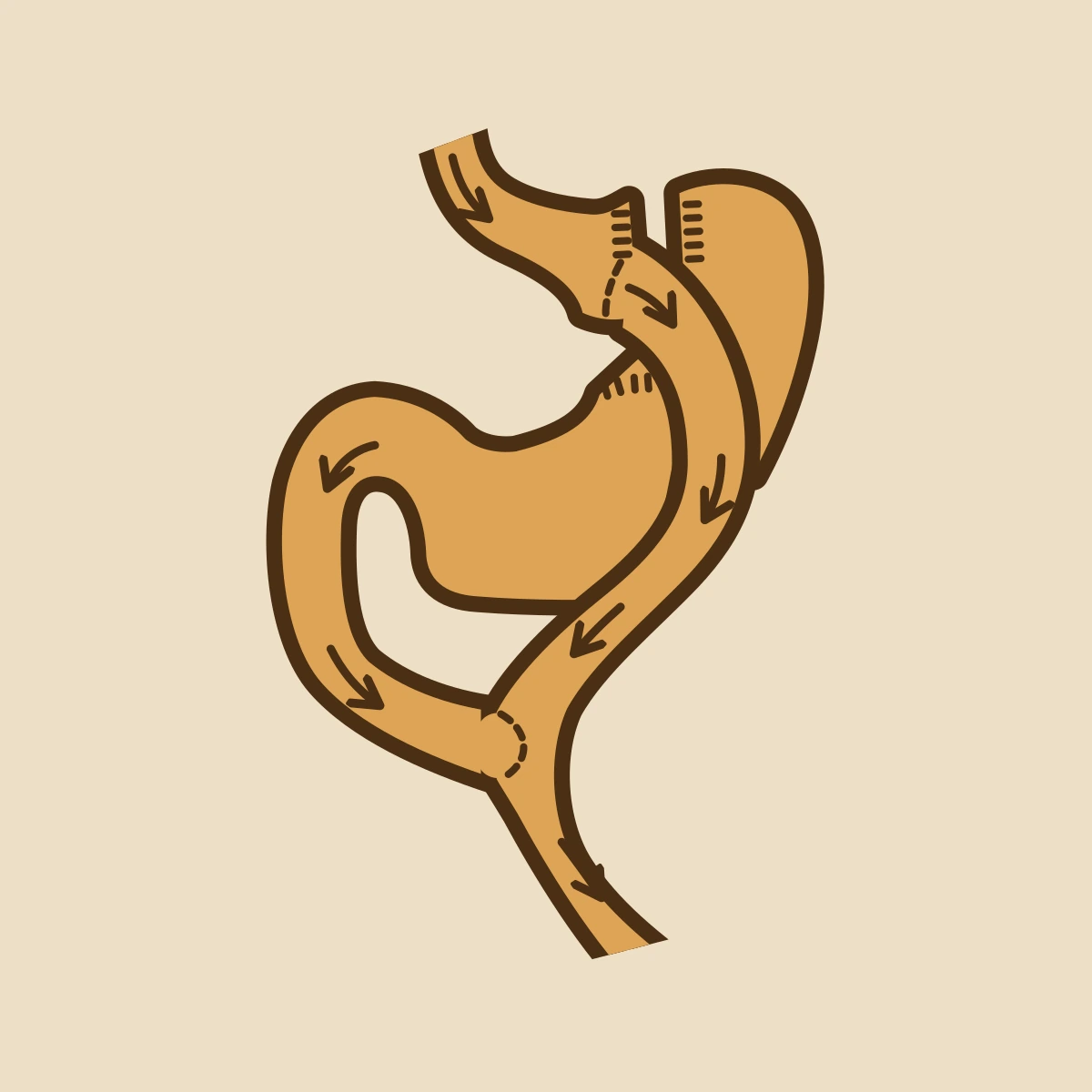
Roux-en-Y Gastric Bypass (RYGB) is a combined bariatric and metabolic surgery that both restricts food intake and reduces nutrient absorption. After the operation, the amount of food patients can eat decreases, and the absorption rate of the food consumed is also lowered.
During surgery, a small gastric pouch is created in the upper part of the stomach using a stapler. A section of the small intestine is then connected (anastomosis) to this small pouch.
The most important feature that distinguishes it from mini gastric bypass is that the intestinal segment carrying the enzymes and fluids produced by the remaining large stomach is reconnected to the main intestinal tract further downstream from the stomach–intestine junction. In this way, two separate anastomoses are created instead of a single one.
Roux-en-Y Gastric Bypass is one of the procedures that can be chosen as a primary option in bariatric and metabolic surgery, depending on the patient’s characteristics.
It can also be preferred as a revision surgery in patients who have previously undergone sleeve gastrectomy and experience weight regain, or who develop severe reflux after surgery that cannot be controlled with medication.

Find answers to common inquiries.
Need personalized support?
WhatsApp us for a quick response—we reply within minutes.


Minimally invasive surgery for long-term weight loss with a simple procedure and no rerouting.
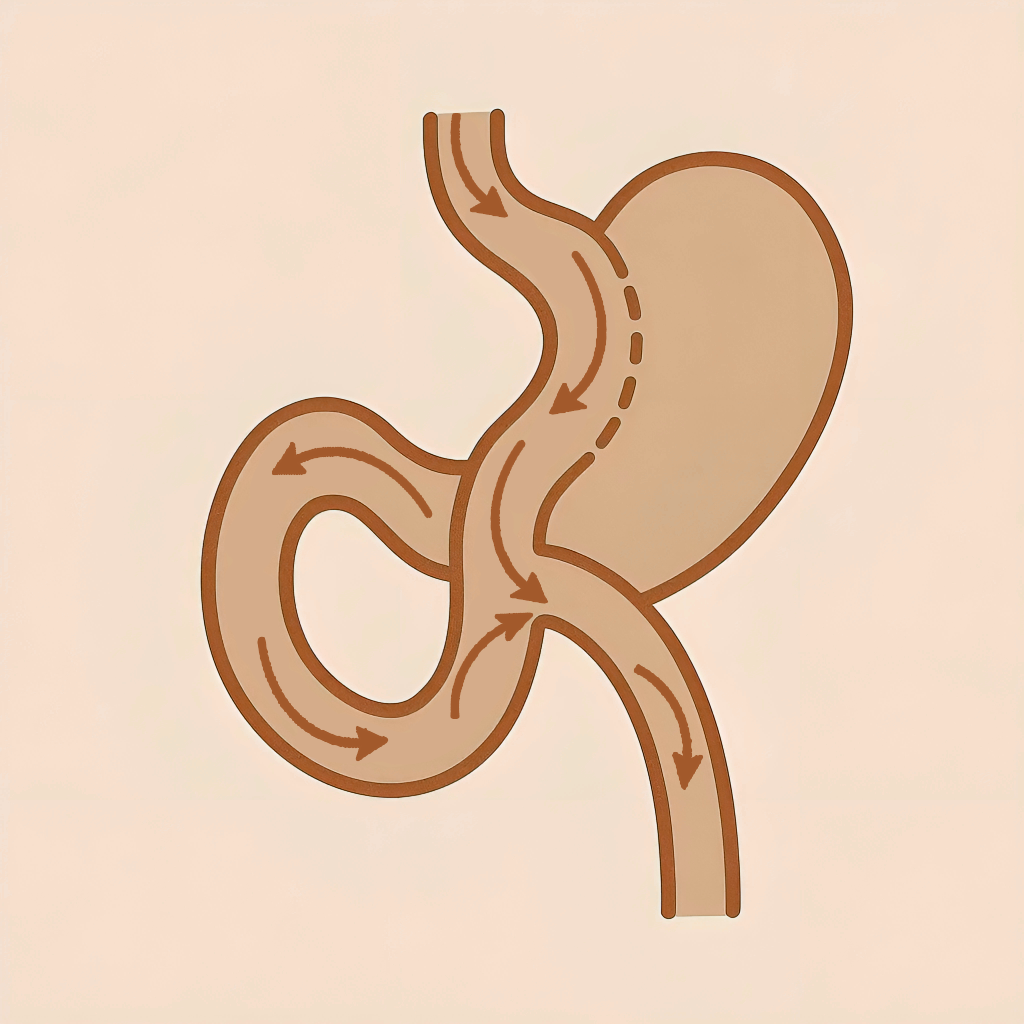
Simpler, less invasive gastric bypass for significant weight loss and diabetes control.
A combined bariatric and metabolic procedure that both restricts intake and reduces absorption, using two anastomoses; suitable as a primary or revision option.
